Why capable leaders start to doubt themselves
Ever found yourself questioning your capability?
If you’ve ever found yourself questioning your capability at work - especially after stepping into a new role, higher visibility, or greater responsibility - you’re not alone.
But it may not be what you’ve been told it is.
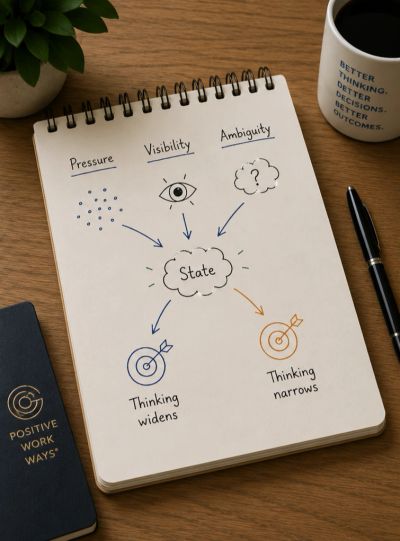
Much of what gets labelled as imposter syndrome, confidence issues, or resilience gaps is not a personal flaw at all. It’s a state response.
When expectations rise, ambiguity increases, or pressure becomes constant, the brain shifts into protection. Thinking narrows. Self‑questioning increases. Attention turns inward.
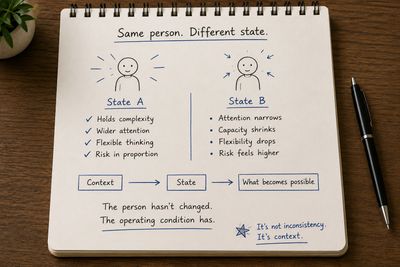
Nothing about your capability has changed.
The conditions have.
The mistake organisations keep making
.png/:/rs=w:400,cg:true,m)
Focusing on the individual
Most workplaces respond to this by focusing on the individual:
- Build confidence
- Increase resilience
- Fix mindset
- Develop personal coping strategies
The problem is that reassurance doesn’t stabilise state. And skills don’t land when the brain is operating under sustained threat.
This is why so many well‑intentioned leadership programmes fail to translate into real behaviour change. They try to fix people when the system is what’s driving the response.
Performance is a brain‑state issue
When certainty drops, the brain prioritises safety
When certainty drops, the brain prioritises safety over creativity, learning, and decision‑making.
This shows up as:
- Overthinking and hesitation
- Reduced confidence in decisions you previously made with ease
- Increased emotional reactivity
- Difficulty focusing or seeing the bigger picture
These are not signs of weakness. They are predictable, biological responses to pressure.
And they are reversible - when the right conditions are in place.
A different way of thinking about leadership
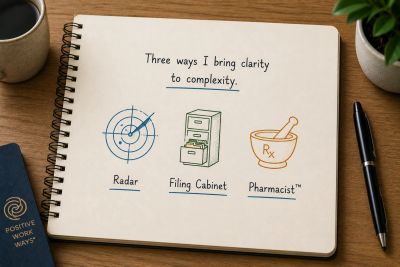
Sustainable performance comes from stabilising brain state
Positive Work Ways® is built on a simple but often overlooked truth:
Sustainable performance comes from stabilising brain state - not diagnosing individuals.
Instead of asking:
What’s wrong with this person?
We ask:
What conditions are shaping their state - and how can those conditions be redesigned?
This shift changes everything.
Leaders regain clarity. Teams engage more consistently. Performance becomes repeatable, not effort‑dependent.
What this work focuses on
This approach supports leaders and organisations to:
- Understand how pressure, uncertainty, and systems shape behaviour
- Recognise early signals of protective brain states
- Design environments that support clear thinking and decision‑making
- Move away from blame, labelling, and surface‑level fixes
The result isn’t softer leadership.
It’s more precise leadership.
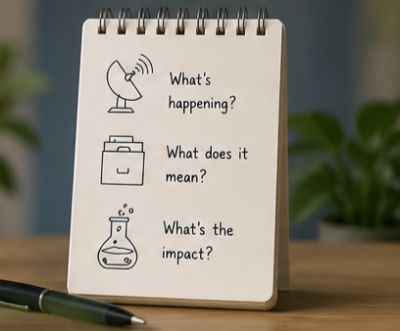
If you want to go deeper
Positive Work Ways Online

This thinking is developed in full through a series of structured online courses that translate neuroscience‑informed insight into practical, everyday leadership application.
The courses are designed for leaders who:
- Want sustainable performance, not burnout cycles
- Are tired of fixing people instead of fixing conditions
- Need language and frameworks that work under real pressure
You can explore the courses here:
Or, if you’re still orienting to the ideas, the free resources and articles provide a useful place to start.
Contact Us
strategic leadership & workforce development
Positive Work Ways
email suppport@positiveworkways.com phone: 07724 666046
